Proper storage capacity planning ensures surveillance systems maintain recorded footage for investigation periods without premature data loss through overwriting. This critical design consideration requires understanding resolution, frame rate, compression, and retention period interrelationships. Through Personet Shop’s expertise in recording equipment specification and configuration, customers can size systems appropriately supporting security objectives. Organizations can also view Personet Shop comprehensive inventory to evaluate solutions that balance performance with budget.
Resolution Impact on File Sizes
Video resolution fundamentally impacts storage consumption. Two-megapixel cameras generate files approximately 25% of the size of 5-megapixel equivalents, substantially reducing storage demands for extended retention periods. However, lower resolution compromises detail capture essential for identification tasks. Organizations must balance resolution selection against storage constraints and investigative requirements.
Standard resolutions include 2MP (1920×1080), 5MP (2560×1920), and 4K (3840×2160). Each resolution increment increases file sizes proportionally while capturing greater detail. Professional assessment determines optimal resolution matching facility requirements and budget allocations.
Frame Rate Considerations
Frame rate determines how frequently cameras capture images, with standard rates at 25-30 frames per second for PAL and NTSC systems. Higher frame rates generate larger files but provide smoother playback and superior motion capture. Lower frame rates reduce file sizes but sacrifice motion smoothness. Security-focused systems typically select moderate frame rates balancing these considerations.
Real-time applications requiring precise motion tracking demand higher frame rates, while monitoring static areas accept lower rates. Selective frame rate adjustment enables different cameras to operate at different rates, optimizing overall bandwidth and storage efficiency.
Compression Algorithm Selection
H.264 compression has dominated surveillance recording, providing quality at reasonable compression ratios. H.265 provides superior compression efficiency, reducing file sizes 40-50% compared to H.264. Newer systems should consider H.265 implementation, while existing infrastructure may require H.264 compatibility.
Compression quality settings range from minimum (high compression, lower quality) to maximum (minimal compression, superior quality). Professional systems select intermediate settings providing adequate quality while maintaining acceptable file sizes.
Calculating Storage Requirements
Storage capacity calculation involves multiplying bitrate, operational hours, and retention period. A 2MP camera operating continuously at 2 Mbps generates 3.6GB daily consumption. Extending retention to 30 days demands approximately 108GB. Multi-camera systems multiply consumption accordingly.
Professional capacity planning tools account for compression variations, frame rate adjustments, and motion detection recording patterns. Conservative estimates should account for variation in actual bitrate consumption, ensuring systems never run out of capacity unexpectedly.
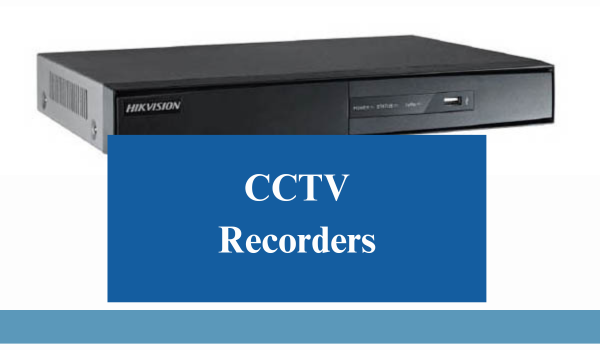
Storage Technology Selection
SATA hard drives offer cost-effectiveness for moderate capacity requirements. NAS arrays provide centralized storage supporting multiple recorders. Cloud storage eliminates on-premises infrastructure but incurs ongoing service fees. Hybrid approaches combine on-premises storage for immediate access with cloud backup protecting against catastrophic failure.
Surveillance-specific drives designed for continuous operation exhibit superior reliability compared to general-purpose alternatives. Hot-swappable configurations enable capacity expansion without system shutdown.
Backup and Redundancy Strategies
Critical footage warrants backup implementation protecting against drive failures. RAID configurations provide redundancy where multiple drives contain duplicated data, enabling recovery from single drive failures. External drive backup enables off-site storage protecting against facility-based disasters.
Scheduled backup operations copy critical footage to independent storage, creating permanent records supplementing continuous recording systems. This layered approach ensures important evidence survives equipment failures and incidents.
Retention Period Optimization
Organizations must balance storage costs against investigative requirements. Minimum retention periods of 7-14 days support most investigations, while high-security applications may require 30-90 day retention. Facility managers should evaluate historical incident timeframes when investigations typically commence, ensuring retention exceeds these typical periods.
Motion-detected recording dramatically reduces consumption compared to continuous recording. Systems maintaining continuous recording months while limiting motion recording to shorter retention periods create cost-effective solutions accommodating diverse requirements.
Professional Consultation Services
Personet Shop’s technical team assists customers calculating precise storage requirements reflecting specific system parameters. Rather than relying on generalized estimates, professional calculations ensure systems provide adequate capacity without wasteful oversizing.
The company assists selecting appropriate equipment accommodating calculated requirements, ensuring systems deliver intended functionality throughout operational lifespans.
Conclusion
Proper storage capacity planning ensures surveillance systems maintain critical footage supporting investigation and security operations. Through professional assessment and appropriate equipment selection, customers deploy recording systems with adequate storage maintaining recorded evidence throughout required retention periods. Personet Shop’s expertise ensures storage infrastructure appropriately supports facility security objectives.